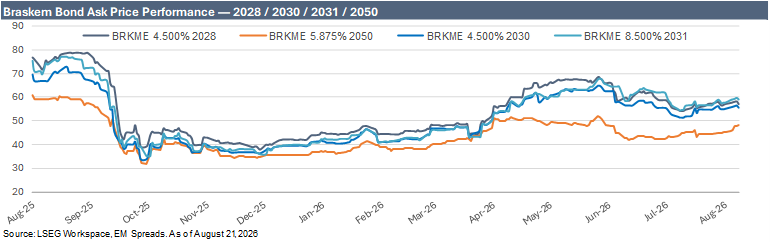
We maintain our Neutral recommendation on Braskem and continue to prefer the BRKME 8.500% 2031s as the most balanced expression of risk across the senior unsecured curve. The basis for the call has changed since 1Q26. Braskem is no longer a stressed liquidity credit facing the possibility of a capital structure solution. Following the June creditor protection measures, the Chapter 15 filing, the expiration of applicable cure periods and subsequent payment defaults, the company is in an active restructuring process. What determines bond value from here is the form of the eventual solution, the treatment of existing unsecured claims, the amount and seniority of any new money and ultimate recovery. The move into default changes how we value the bonds, but it does not on its own justify a more negative stance when current dollar prices already discount substantial impairment.
The 2Q26 earnings recovery does not alter that framework. Adjusted EBITDA of R$5.25 billion was driven by a supply shock to petrochemical spreads that management itself does not treat as a cyclical turn, and reference spreads had already returned to pre-conflict levels by quarter-end. For creditors, the more important point is that the earnings did not translate into positive free operating cash flow. Working capital absorbed R$2.76 billion, reported operating cash flow was only R$29 million and free operating cash flow remained negative at R$535 million. The quarter shows what the assets can earn under favorable spreads. It does not show that the balance sheet problem has been solved. Available corporate cash covers only around two-thirds of remaining 2026 contractual maturities before the reclassification of defaulted obligations, which in our view makes some combination of creditor concessions and external support increasingly difficult to avoid.
Two developments since 1Q26 partially offset the fundamental weakness and are the main reason we do not move to Underweight. First, the existing capital structure still leaves the unsecured curve with recovery optionality. The 2Q26 debt breakdown shows corporate debt concentrated in bonds and unsecured debentures, so the senior unsecured curve has no large layer of collateralized debt ahead of it today. That may not last. Braskem’s August 20 filing confirms that creditor proposals under evaluation include potential capitalization and the granting of security interests over assets, which makes the amount and form of any new collateralization an important recovery variable.
Second, the Braskem Idesa agreement is a useful reference for the restructuring process, though not for recovery. It shows that Braskem can close a complex creditor negotiation involving substantial deleveraging, new capital and a prepackaged filing. Against that, the parent retains a funding commitment to the subsidiary that is an additional call on liquidity at a point when liquidity is the binding constraint, and we do not read the Idesa outcome as a recovery floor for BRKME unsecured notes. Braskem said on August 20 that discussions with financial creditors had intensified and that it was evaluating potential additional protection measures as the 60-day stay approaches expiry, with no decision yet reached on restructuring terms. The expiry of that protection period and the choice of restructuring path are the next decision points.